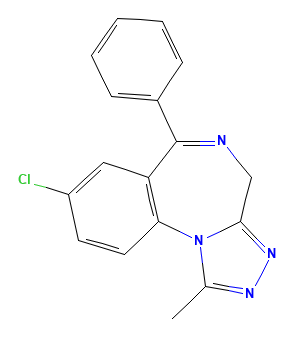
Alprazolam (Xanax)
Fast-acting benzodiazepine commonly prescribed for anxiety and panic disorders. Highly effective but carries significant addiction and withdrawal risks. One of the most prescribed psychiatric medications.
Important information
This information is for educational purposes only. Always research thoroughly, test your substances, understand legal implications, and consult healthcare professionals. Never use substances alone or in unsafe environments.
Risks & side effects
- Highly addictive
- Severe withdrawal (can be fatal)
- Blackouts
- Respiratory depression
- Memory problems
- Rebound anxiety
- Disinhibition leading to dangerous behavior
- Deadly with opioids/alcohol
Read the interactions and harm-reduction information below before the reference ranges.
Known interactions
Dangerous Alprazolam + Fentanyl
Opioid + benzodiazepine is one of the most common fatal drug combinations. Both suppress breathing through different mechanisms.
Risks: Fatal respiratory depression · Profound sedation · Coma · Death — even at normal doses of each
Mechanism: Opioids depress brainstem respiratory centers via mu-receptors. Benzodiazepines enhance GABA inhibition. Combined effect on respiratory drive is synergistic, not just additive.
What reduces the risk
- NEVER combine opioids with benzodiazepines
- FDA Black Box Warning exists for this combination
- Have naloxone available
- Seek medical supervision if prescribed both
Sources: FDA Drug Safety Communication: Opioid-Benzodiazepine Interactions (2016) · Park TW et al. Benzodiazepine prescribing patterns and deaths from drug overdose. BMJ. 2015 · TripSit Interaction Chart
Dangerous Alprazolam + Heroin (Diacetylmorphine)
Heroin and benzodiazepines are involved in a large proportion of opioid overdose deaths. This is an extremely dangerous combination.
Risks: Fatal respiratory depression · Overdose · Loss of consciousness · Aspiration
Mechanism: Synergistic respiratory depression via mu-opioid and GABA-A receptor activation.
What reduces the risk
- NEVER combine
- Naloxone/Narcan must be available
- Never use alone
- Call 911 immediately for any suspected overdose
Sources: FDA Black Box Warning: Opioid-Benzodiazepine Combinations · Jones CM, McAninch JK. Emergency department visits and overdose deaths from combined use of opioids and benzodiazepines. Am J Prev Med. 2015 · TripSit Interaction Chart
Dangerous Alprazolam + Alcohol (Ethanol)
Both act on GABA-A receptors, producing synergistic sedation and respiratory depression. A very common cause of accidental death.
Risks: Respiratory depression · Profound sedation · Blackout with dangerous behavior · Death · Aspiration
Mechanism: Both are GABA-A positive allosteric modulators. Combined effect is synergistic — much greater than either alone.
What reduces the risk
- NEVER drink alcohol while taking benzodiazepines
- Even one drink can be dangerous
- Blackouts are common and lead to dangerous situations
- Seek medical help if dependent on either
Sources: FDA Drug Safety Communication · TripSit Interaction Chart · NIAAA: Harmful Interactions with Alcohol
Dangerous Alprazolam + Ibogaine
Benzodiazepines combined with ibogaine increase cardiac and respiratory depression risk. Ibogaine clinics require benzodiazepine clearance.
Risks: Fatal cardiac arrhythmia · Respiratory failure · Profound sedation
Mechanism: Additive CNS/respiratory depression + ibogaine's QT prolongation.
What reduces the risk
- Must taper off benzodiazepines before ibogaine treatment
- Medical supervision mandatory
- Do NOT abruptly stop benzodiazepines (seizure risk)
Sources: GITA: Clinical Guidelines for Ibogaine-Assisted Detoxification · TripSit Interaction Chart
Absence of a listed interaction never implies safety. Check any combination in the app's 23×23 interaction matrix.
Harm reduction
- Never mix with opioids or alcohol
- Don't stop abruptly if dependent (medical taper required)
- Avoid daily use if possible
- Keep doses low
- Never take someone else's prescription
- Store securely
- Taper slowly under medical supervision
Dosage information
Medical: 0.25-0.5mg 3x daily | Threshold: 0.25mg | Light: 0.25-0.5mg | Common: 0.5-1mg | Strong: 1-2mg | Heavy: 2mg+ (dangerous)
Dosage ranges are reference values from published literature, not recommendations. Potency varies by source, body weight, and individual sensitivity — harm-reduction practice starts well below the ranges listed.
Before any number: set, setting, purity, dose · LD50 · microdosing
On this page: known interactions · harm reduction
Duration
4-6 hours | Onset: 15-30 minutes | Peak: 1-2 hours | Half-life: 11 hours
4-6 hours active. Half-life: ~11 hours. Do not stop abruptly if dependent.
Effects
- Anxiety relief
- Sedation
- Muscle relaxation
- Euphoria (at higher doses)
- Reduced inhibitions
- Memory impairment
- Sleepiness
Legal status
Schedule IV (USA). Prescription required. Commonly diverted and sold illegally.
Pharmacology
GABA-A receptor positive allosteric modulator. High-potency, short-acting benzodiazepine.
Therapeutic research
- FDA-approved for generalized anxiety disorder and panic disorder
- Short-term treatment of acute anxiety, panic attacks, and insomnia
- Adjunct for alcohol withdrawal management in clinical settings
- Research focus shifting to safer alternatives: gabapentin, hydroxyzine, buspirone
- Benzodiazepine deprescribing protocols being developed to safely taper long-term users
- GABA-A subtype-selective compounds in development aiming for anxiolysis without sedation or dependence
Research
A preview of the linked research. The library includes different kinds of evidence; read each source for its methods and limitations.
Benzodiazepine co-dependence exacerbates the opiate withdrawal syndrome
Brands et al. 2008 naturalistic study — first to examine clinical impact of benzodiazepine co-dependence on opiate withdrawal. Co-dependent patients had more severe withdrawal and lower detoxification completion rates.
Sun et al. 2017 study of Medicare beneficiaries showing concurrent benzodiazepine use is associated with a 5-fold increase in opioid-related overdose risk during the first 90 days. Published in JAMA Network Open.
The epidemiology of benzodiazepine misuse: A systematic review
Votaw et al. 2019 systematic review documenting that benzodiazepines are involved in nearly 30% of opioid overdose deaths. Maps global prevalence of misuse and identifies key risk populations.
History & culture
Benzodiazepines were discovered in 1955 by Leo Sternbach at Hoffmann-La Roche. Chlordiazepoxide (Librium, 1960) and diazepam (Valium, 1963) became the most prescribed drugs in the world by the 1970s — 'Mother's Little Helper' as the Rolling Stones sang. Alprazolam (Xanax) was developed by Upjohn and approved by the FDA in 1981, specifically marketed for panic disorder. It became the single most prescribed psychiatric medication in the United States. The benzo epidemic paralleled the opioid crisis: overprescription → dependence → a withdrawal syndrome so dangerous it can cause fatal seizures. Today, benzodiazepines are involved in ~16% of opioid overdose deaths, and the Ashton Manual (2002) remains the definitive tapering guide.
Natural origins
Alprazolam is entirely synthetic — a triazolobenzodiazepine designed in the laboratory. However, the GABA system it targets is ubiquitous in nature. Several natural compounds act on GABA-A receptors: valerenic acid (from Valeriana officinalis/valerian root), magnolol and honokiol (from Magnolia bark), apigenin (from chamomile), and baicalin (from Scutellaria baicalensis/Chinese skullcap). Kava (Piper methysticum) kavalactones also modulate GABA, producing anxiolytic effects. None of these natural GABA modulators approach the potency or addiction risk of synthetic benzodiazepines.