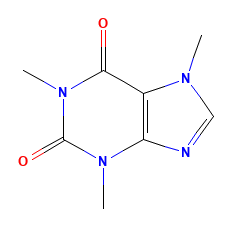
Caffeine
Most widely consumed psychoactive substance globally. Adenosine antagonist that promotes wakefulness and alertness.
Important information
This information is for educational purposes only. Always research thoroughly, test your substances, understand legal implications, and consult healthcare professionals. Never use substances alone or in unsafe environments.
Risks & side effects
- Anxiety and jitters
- Insomnia
- Dependency
- Tolerance
- Withdrawal headaches
- Increased heart rate
- Digestive issues
Read the interactions and harm-reduction information below before the reference ranges.
Known interactions
Caution Caffeine + Fentanyl
Caffeine is a far weaker stimulant than cocaine or amphetamine, and this is not the same risk as those combinations. It still shifts how sedated a person feels without changing what fentanyl does to breathing.
Risks: Sedation judged by how alert someone feels rather than by the dose taken · No protection against respiratory depression · Disrupted sleep across a long opioid offset
Mechanism: Raised alertness can make an opioid feel less sedating than it is. The masking is much weaker than with a potent stimulant, and it offers no protection against respiratory depression.
What reduces the risk
- Do not read alertness as a sign the opioid has worn off
- Never use a stimulant to counteract opioid sedation
- Keep naloxone within reach and do not dose alone
Sources: NIDA Research Topics: Polysubstance Use
Caution Caffeine + Heroin (Diacetylmorphine)
Caffeine is a far weaker stimulant than cocaine or amphetamine, and this is not the same risk as those combinations. It still shifts how sedated a person feels without changing what heroin does to breathing.
Risks: Sedation judged by how alert someone feels rather than by the dose taken · No protection against respiratory depression · Disrupted sleep across a long opioid offset
Mechanism: Raised alertness can make an opioid feel less sedating than it is. The masking is much weaker than with a potent stimulant, and it offers no protection against respiratory depression.
What reduces the risk
- Do not read alertness as a sign the opioid has worn off
- Never use a stimulant to counteract opioid sedation
- Keep naloxone within reach and do not dose alone
Sources: NIDA Research Topics: Polysubstance Use
Caution Caffeine + Cocaine
Both are stimulants that increase heart rate and blood pressure. Combining adds cardiovascular strain.
Risks: Increased heart rate · Elevated blood pressure · Cardiac arrhythmia · Anxiety
Mechanism: Cocaine blocks catecholamine reuptake; caffeine blocks adenosine (removing natural brake on stimulation). Additive cardiac effects.
What reduces the risk
- Minimize caffeine intake if using cocaine
- Monitor heart rate
- Seek medical attention for chest pain
Sources: TripSit Interaction Chart · PsychonautWiki: Stimulant Interactions
Low risk Caffeine + THC (Tetrahydrocannabinol)
A common combination with generally mild interaction. Caffeine may increase anxiety that some cannabis users experience.
Risks: Increased anxiety in sensitive individuals · Elevated heart rate · Possible increased paranoia
Mechanism: Caffeine's adenosine antagonism and THC's CB1 agonism operate on different systems with minimal direct interaction.
What reduces the risk
- Generally considered low risk
- Reduce caffeine if anxiety is a concern
- Stay hydrated
Sources: TripSit Interaction Chart
Absence of a listed interaction never implies safety. Check any combination in the app's 23×23 interaction matrix.
Harm reduction
- Moderate consumption (under 400mg/day)
- Avoid late-day use
- Stay hydrated
- Take tolerance breaks
- Don't mix with other stimulants excessively
- Monitor cardiovascular effects
Dosage information
Caffeine · Oral · non-clinical reference ranges
Tier labels reproduce reported amount and intensity terminology; they do not indicate safety or a recommendation.
| Tier | Amount | Note |
|---|---|---|
| Threshold | 20 milligrams | |
| Light | 50 to 100 milligrams | |
| Common | 100 to 200 milligrams | |
| Strong | 200 to 400 milligrams | |
| Heavy | Reported lower bound: 400 milligrams; no upper bound is established. | not recommended |
Dosage ranges are reference values from published literature, not recommendations. Potency varies by source, body weight, and individual sensitivity — harm-reduction practice starts well below the ranges listed.
Limitations: Figures are transcribed from a reference compilation, not measured in a controlled study; the potency of any given material is unknown until tested.
Evidence: Review or reference work
Before any number: set, setting, purity, dose · LD50 · microdosing
On this page: known interactions · harm reduction
Duration
3-6 hours | Half-life: 5 hours
Total: 3-6 hours. Half-life ~5 hours. Avoid late in the day.
Effects
- Increased alertness
- Reduced fatigue
- Enhanced focus
- Improved mood
- Increased energy
- Enhanced physical performance
Legal status
Legal and unregulated worldwide.
Pharmacology
Adenosine receptor antagonist. Prevents adenosine from binding and causing drowsiness.
Therapeutic research
- FDA-approved: Caffeine citrate for neonatal apnea of prematurity
- Established cognitive enhancer: Improves alertness, attention, and reaction time (meta-analyses)
- Studies suggest reduced risk of Parkinson's disease, Alzheimer's, type 2 diabetes, and certain cancers with moderate use
- Ergogenic aid: Enhances athletic performance — recognized by sports science organizations
- Analgesic adjuvant: Enhances effectiveness of pain medications (included in Excedrin, Anacin)
- Research into caffeine for post-operative cognitive recovery and respiratory function
Research
A preview of the linked research. The library includes different kinds of evidence; read each source for its methods and limitations.
Coffee and caffeine consumption and depression: A meta-analysis of observational studies
Wang et al. 2016 Aust NZ J Psychiatry. Meta-analysis of 11 studies showing coffee/caffeine consumption associated with decreased depression risk.
Caffeine Consumption Patterns, Health Impacts, and Media Influence: A Narrative Review
2025 comprehensive review covering caffeine's cognitive benefits, physical performance enhancement, cardiovascular risks, addiction potential, and sleep disruption. Documents individual variability in caffeine metabolism due to CYP1A2 genetics.
The effect of caffeine on subsequent sleep: A systematic review and meta-analysis
Gardiner et al. 2023 meta-analysis finding caffeine reduces total sleep time by 45 minutes, increases sleep onset latency, and reduces sleep efficiency. Effects persist up to 8+ hours due to caffeine's variable half-life across individuals.
Sources 1
History & culture
Coffee was discovered according to Ethiopian legend by a goat herder named Kaldi around the 9th century, who noticed his goats became energetic after eating coffee berries. Tea use in China dates back to at least 3,000 years ago, attributed to Emperor Shennong. Coffee houses ('qahveh khaneh') spread through the Ottoman Empire in the 15th–16th centuries and became intellectual hubs in 17th-century Europe — London's coffeehouses were called 'penny universities.' Friedlieb Runge first isolated caffeine from coffee in 1819 at Goethe's suggestion. Today, caffeine is the most widely consumed psychoactive substance worldwide, with over 2 billion cups of coffee consumed daily.
Natural origins
Caffeine occurs naturally in over 60 plant species, where it evolved independently multiple times as an insect deterrent. Major sources include Coffea arabica and Coffea canephora (coffee, native to Ethiopia), Camellia sinensis (tea, native to East Asia), Theobroma cacao (chocolate, native to Central/South America), Cola nitida (kola nut, native to West Africa), Ilex paraguariensis (yerba maté, native to South America), and Paullinia cupana (guaraná, native to the Amazon). Caffeine belongs to the xanthine class of alkaloids alongside theobromine (chocolate) and theophylline (tea).