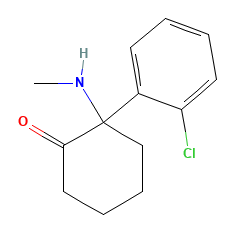
Ketamine
Dissociative anesthetic used medically and recreationally. Known for inducing the 'K-hole' at higher doses. FDA-approved for treatment-resistant depression.
Important information
This information is for educational purposes only. Always research thoroughly, test your substances, understand legal implications, and consult healthcare professionals. Never use substances alone or in unsafe environments.
Risks & side effects
- Bladder damage with chronic use
- Addiction potential
- Impaired motor function
- Confusion
- Nausea
- Respiratory depression at high doses
Read the interactions and harm-reduction information below before the reference ranges.
Known interactions
Dangerous Ketamine + Fentanyl
Despite some medical co-administration, unsupervised combination of ketamine and opioids creates severe respiratory depression risk.
Risks: Respiratory depression · Loss of consciousness · Inability to detect overdose symptoms · Death
Mechanism: Ketamine's dissociative sedation masks opioid overdose signs. Combined respiratory depression can be fatal.
What reduces the risk
- Never combine without medical supervision
- Have naloxone available
- Never use alone
Sources: TripSit Interaction Chart · PsychonautWiki: Ketamine Interactions
Dangerous Ketamine + Heroin (Diacetylmorphine)
Combining dissociatives with opioids is extremely dangerous. Ketamine masks overdose signs while both suppress breathing.
Risks: Fatal respiratory depression · Unable to recognize overdose · Aspiration · Death
Mechanism: Ketamine-induced dissociation prevents awareness of opioid overdose. Additive respiratory depression.
What reduces the risk
- NEVER combine
- Have naloxone available
- Never use alone
Sources: TripSit Interaction Chart · PsychonautWiki: Ketamine Interactions
Unsafe Ketamine + Alcohol (Ethanol)
Both are CNS depressants. Combining significantly increases risk of vomiting, aspiration, and loss of consciousness.
Risks: Aspiration (vomiting while unconscious) · Respiratory depression · Severe disorientation · Loss of consciousness · Memory blackout
Mechanism: Alcohol's GABA-mediated CNS depression adds to ketamine's NMDA antagonism. Both impair motor function and consciousness.
What reduces the risk
- Avoid combining ketamine with alcohol
- If both are used, reduce doses significantly
- Never lie on your back — recovery position
- Have a sitter present
Sources: TripSit Interaction Chart · PsychonautWiki: Ketamine Interactions · DanceSafe: Ketamine Safety
Caution Ketamine + Psilocybin
Both produce altered states through different mechanisms. The combination can be intensely disorienting but is not typically physiologically dangerous.
Risks: Extreme disorientation · Loss of motor control · Nausea · Overwhelming psychological effects
Mechanism: Psilocybin's 5-HT2A agonism + ketamine's NMDA antagonism = dual dissociative-psychedelic state.
What reduces the risk
- Only for very experienced users
- Reduce doses of both significantly
- Sitter essential
- Safe physical environment mandatory
Sources: TripSit Interaction Chart · PsychonautWiki: Ketamine Combinations
Absence of a listed interaction never implies safety. Check any combination in the app's 23×23 interaction matrix.
Harm reduction
- Sitting/lying position essential
- Safe environment
- Sitter recommended
- Avoid alcohol and opioids
- Don't redose quickly
- Limit frequency of use
- Stay hydrated
Dosage information
Ketamine · Insufflated · non-clinical reference ranges
Tier labels reproduce reported amount and intensity terminology; they do not indicate safety or a recommendation.
| Tier | Amount | Note |
|---|---|---|
| Threshold | 10 milligrams | |
| Light | 15 to 30 milligrams | |
| Common | 30 to 75 milligrams | |
| Strong | 75 to 150 milligrams | |
| K-hole | Reported lower bound: 150 milligrams; no upper bound is established. |
Dosage ranges are reference values from published literature, not recommendations. Potency varies by source, body weight, and individual sensitivity — harm-reduction practice starts well below the ranges listed.
Limitations: Figures are transcribed from a reference compilation, not measured in a controlled study; the potency of any given material is unknown until tested.
Evidence: Review or reference work
Before any number: set, setting, purity, dose · LD50 · microdosing
On this page: known interactions · harm reduction
Duration
1-2 hours | Onset: 5-15 minutes (insufflated)
Insufflated: 1-2 hours. Most common recreational route.
IM: Medical/clinical setting. Rapid onset, reliable absorption.
Effects
- Dissociation
- Analgesia
- Dream-like state
- Out-of-body experiences
- Reduced sensory perception
- Philosophical insights
Legal status
Schedule III (USA). Prescription medication. Illegal for recreational use.
Pharmacology
NMDA receptor antagonist. Also affects opioid and dopamine systems.
Therapeutic research
- FDA-approved: Esketamine (Spravato) nasal spray for treatment-resistant depression (2019)
- Rapid-acting antidepressant: Effects within hours vs. weeks for traditional antidepressants (Berman et al., 2000; Zarate et al., 2006)
- Ketamine-assisted psychotherapy (KAP) offered at hundreds of clinics in the US
- Research for PTSD, suicidal ideation, OCD, and chronic pain
- WHO Essential Medicine for anesthesia — one of the safest general anesthetics known
- Studies on ketamine's neuroplasticity-promoting effects via BDNF and mTOR pathways
Research
A preview of the linked research. The library includes different kinds of evidence; read each source for its methods and limitations.
Dose-related effects of ketamine for antidepressant-resistant symptoms of PTSD in veterans
Landmark multi-center RCT (Abdallah et al., 2022) showing dose-related ketamine effects for treatment-resistant PTSD symptoms in veterans and active duty military. Published in Neuropsychopharmacology.
Personalized Use of Ketamine for Treatment-Resistant Depression
Nature Translational Psychiatry study on personalized ketamine dosing strategies for treatment-resistant depression.
Ketamine-assisted psychotherapy for trauma-exposed patients
Clinical chart review study examining ketamine-assisted psychotherapy outcomes in trauma-exposed patients.
Sources 2
- Rapid-acting antidepressant ketamine: A review. Pharmacology Biochemistry and Behavior, 164, pp. 32-44 (2018) doi:10.1016/j.pbb.2017.08.005
- Erowid Ketamine Vault
History & culture
Ketamine was first synthesized by Calvin Stevens at Parke-Davis in 1962 as a safer alternative to phencyclidine (PCP). It was first used on humans in 1964 and approved by the FDA in 1970. It saw extensive use as a battlefield anesthetic during the Vietnam War due to its wide safety margin. Recreational use emerged in the 1970s–80s, particularly in club and rave scenes. John Lilly's sensory deprivation tank experiments with ketamine in the 1970s explored its dissociative and visionary properties. The discovery of ketamine's rapid antidepressant effects by Berman et al. in 2000 launched a revolution in psychiatry.
Natural origins
Ketamine is entirely synthetic — no natural source exists. It belongs to the arylcyclohexylamine chemical class, related to PCP. Its structure features a cyclohexanone ring bonded to a chlorophenyl group. Ketamine exists as two enantiomers: S-ketamine (esketamine, more potent, FDA-approved as Spravato) and R-ketamine (arketamine, under investigation, may have fewer side effects). The drug's mechanism is unique among anesthetics — it blocks NMDA glutamate receptors rather than enhancing GABA.
Molecular family: Arylcyclohexylamines
Arylcyclohexylamines are dissociatives featuring an aryl group (like phenyl) attached to a cyclohexylamine core. This scaffold includes ketamine and related compounds. Unlike psychedelics, these substances work primarily on NMDA receptors and produce dissociation and anesthesia. The structural modification from simple aryl substitution produces dramatic shifts in consciousness. Key characteristics: - Aryl group (benzene or substituted benzene) connected to cyclohexylamine - NMDA receptor antagonists - Produce dissociation rather than visual/perceptual effects - Include both medical anesthetics and research compounds - Shorter duration than tryptamine psychedelics Dissociatives represent a distinct pharmacological category. While psychedelics primarily enhance perception and connectivity, dissociatives disconnect consciousness from body awareness—a fundamentally different altered state produced by targeting different receptors.
Structurally related to None identified