Salvia divinorum
Powerful, short-acting dissociative psychedelic plant. Contains salvinorin A, a kappa-opioid receptor agonist. Produces intense reality-altering effects.
Important information
This information is for educational purposes only. Always research thoroughly, test your substances, understand legal implications, and consult healthcare professionals. Never use substances alone or in unsafe environments.
Risks & side effects
- Extremely disorienting
- Physical injury risk
- Psychological distress
- Uncontrolled movement
Read the interactions and harm-reduction information below before the reference ranges.
Known interactions
Caution Salvia divinorum + Psilocybin
Salvia acts on kappa-opioid receptors (unique mechanism). Combining with serotonergic psychedelics creates unpredictable and potentially overwhelming effects.
Risks: Extremely intense and unpredictable experience · Physical danger from disorientation · Severe dysphoria · Psychological overwhelm
Mechanism: Kappa-opioid agonism (salvia) + 5-HT2A agonism (psilocybin) = dual psychedelic mechanisms with unpredictable interaction.
What reduces the risk
- Not recommended
- If combining, use very low doses of both
- Sitter absolutely essential
- Safe physical environment critical
Sources: PsychonautWiki: Salvia Interactions · Erowid: Combination Reports
Absence of a listed interaction never implies safety. Check any combination in the app's 23×23 interaction matrix.
Harm reduction
- Sitter absolutely essential
- Sitting/lying position
- Remove dangerous objects
- Low lighting
- Don't stand or walk
- Start with plain leaf
- Safe, quiet space
Dosage information
Smoked leaf: 0.25-1g | Extract: varies by potency | Quid: 3-8 fresh leaves
Dosage ranges are reference values from published literature, not recommendations. Potency varies by source, body weight, and individual sensitivity — harm-reduction practice starts well below the ranges listed.
Before any number: set, setting, purity, dose · LD50 · microdosing
On this page: known interactions · harm reduction
Duration
5-30 minutes (smoked) | 1-2 hours (quid)
Smoked: 5-30 minutes. Extremely rapid onset, very short duration.
Quid (sublingual): 1-2 hours. Gentler onset than smoked.
Effects
- Reality distortion
- Uncontrollable laughter
- Time loops
- Becoming objects
- Dimensional shifting
- Complete dissociation
Legal status
Legal in some countries/states, controlled in others. Legal status varies widely.
Pharmacology
Kappa-opioid receptor agonist. Unique mechanism unlike other psychedelics.
Therapeutic research
- Limited clinical research — salvinorin A's unique kappa-opioid mechanism makes it pharmacologically distinct from other psychedelics
- Preliminary research suggests potential applications in pain management via kappa-opioid modulation
- Investigated as a research tool for understanding kappa-opioid receptor function and consciousness
- Some researchers propose potential for treating stimulant addiction (kappa agonism reduces dopamine release)
- No current clinical trials for therapeutic applications
Research
A preview of the linked research. The library includes different kinds of evidence; read each source for its methods and limitations.
Butelman, Kreek 2015 Frontiers in Pharmacology. Comprehensive review of salvinorin A pharmacology as a selective kappa-opioid agonist and potential therapeutic applications.
Brito-da-Costa et al. 2021 Pharmaceuticals. Review of salvinorin A pharmacokinetics, metabolism, and clinical implications for forensic assessment.
Salvinorin A and Salvia divinorum: Toxicology, Pharmacological Profile, and Therapeutic Potential
Calado et al. 2025 Int J Mol Sci. Comprehensive toxicology review covering salvinorin A safety profile, LD50 data, adverse effects, and therapeutic potential.
History & culture
Salvia divinorum has been used for centuries by Mazatec indigenous people in the Sierra Mazateca region of Oaxaca, Mexico. Mazatec healers (curanderos) use the plant in divination and healing ceremonies, typically preparing it as a quid of rolled fresh leaves or an infusion. The plant was first described by Western science by Jean Basset Johnson in 1939, and its identity was confirmed by R. Gordon Wasson and Albert Hofmann in 1962. Salvinorin A, the active compound, was isolated by Alfredo Ortega in 1982 and is notable as the most potent naturally occurring hallucinogen by weight and the only known non-nitrogenous psychedelic.
Natural origins
Salvia divinorum is a perennial herb in the mint family (Lamiaceae), native to cloud forests in the Sierra Mazateca of Oaxaca, Mexico, at elevations of 300–1,800 meters. The plant rarely produces viable seeds and primarily propagates vegetatively — nearly all cultivated specimens worldwide descend from a few clonal lineages collected by Wasson and others. It thrives in shaded, humid conditions. Salvinorin A is concentrated in the leaves and is a terpenoid, not an alkaloid — making it structurally unique among psychoactive substances.
External resources
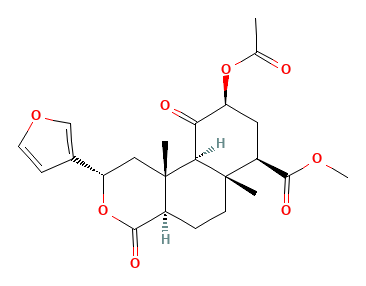
Rotate and inspect Salvinorin A in Molecule Studio — right in your browser