Heroin (Diacetylmorphine)
Opioid derived from morphine, producing intense euphoria and pain relief. High addiction potential. Major contributor to overdose deaths — today driven overwhelmingly by fentanyl contamination of the unregulated supply. Injection carries additional risks.
Important information
This information is for educational purposes only. Always research thoroughly, test your substances, understand legal implications, and consult healthcare professionals. Never use substances alone or in unsafe environments.
Risks & side effects
- High addiction potential — dependence builds quickly with regular use, though most people who ever use do not become dependent
- Overdose (fatal respiratory depression)
- Fentanyl contamination
- Infectious diseases (HIV, Hep C from injection)
- Abscesses
- Severe withdrawal
- Constipation
- Physical dependence
- Death
Read the interactions and harm-reduction information below before the reference ranges.
Known interactions
Dangerous Heroin + Fentanyl
Combining opioids dramatically increases overdose risk. Fentanyl's extreme potency makes any combination with other opioids potentially lethal.
Risks: Fatal respiratory depression · Overdose death · Loss of consciousness · Cardiac arrest
Mechanism: Additive mu-opioid receptor activation causes severe respiratory depression. Fentanyl's potency (50-100x morphine) makes dosing unpredictable.
What reduces the risk
- NEVER combine opioids
- Always have naloxone/Narcan available
- Never use alone
- Call 911 immediately if overdose suspected
Sources: CDC: Fentanyl Facts · NIDA: Overdose Death Rates · TripSit Interaction Chart
Dangerous Heroin + Alprazolam (Xanax)
Heroin and benzodiazepines are involved in a large proportion of opioid overdose deaths. This is an extremely dangerous combination.
Risks: Fatal respiratory depression · Overdose · Loss of consciousness · Aspiration
Mechanism: Synergistic respiratory depression via mu-opioid and GABA-A receptor activation.
What reduces the risk
- NEVER combine
- Naloxone/Narcan must be available
- Never use alone
- Call 911 immediately for any suspected overdose
Sources: FDA Black Box Warning: Opioid-Benzodiazepine Combinations · Jones CM, McAninch JK. Emergency department visits and overdose deaths from combined use of opioids and benzodiazepines. Am J Prev Med. 2015 · TripSit Interaction Chart
Dangerous Heroin + Cocaine
Cocaine does not cancel out heroin. It masks the sedation that would otherwise signal a rising opioid dose, so the opioid is often repeated, and it wears off first — leaving the respiratory depression unopposed.
Risks: Fatal respiratory depression after the stimulant wears off · Opioid dose repeated because sedation is masked · Cardiac strain from raised oxygen demand against suppressed breathing · Overdose recognised too late
Mechanism: Opposing effects on different systems, with different durations. The stimulant raises arousal, heart rate and oxygen demand while the mu-opioid agonist suppresses the respiratory drive. When the stimulant clears, the opioid effect remains.
What reduces the risk
- Avoid the combination
- Risk continues for hours after the stimulant fades, not only at the peak
- Keep naloxone within reach and do not dose alone
- Fentanyl test strips miss some analogues, so a negative result settles nothing
Sources: CDC: stimulant-involved opioid overdose deaths (National Vital Statistics System) · NIDA Research Topics: Polysubstance Use
Dangerous Heroin + Methamphetamine
Methamphetamine does not cancel out heroin. It masks the sedation that would otherwise signal a rising opioid dose, so the opioid is often repeated, and it wears off first — leaving the respiratory depression unopposed.
Risks: Fatal respiratory depression after the stimulant wears off · Opioid dose repeated because sedation is masked · Cardiac strain from raised oxygen demand against suppressed breathing · Overdose recognised too late
Mechanism: Opposing effects on different systems, with different durations. The stimulant raises arousal, heart rate and oxygen demand while the mu-opioid agonist suppresses the respiratory drive. When the stimulant clears, the opioid effect remains.
What reduces the risk
- Avoid the combination
- Risk continues for hours after the stimulant fades, not only at the peak
- Keep naloxone within reach and do not dose alone
- Fentanyl test strips miss some analogues, so a negative result settles nothing
Sources: CDC: stimulant-involved opioid overdose deaths (National Vital Statistics System) · NIDA Research Topics: Polysubstance Use
Dangerous Heroin + Adderall (Amphetamine)
Adderall does not cancel out heroin. It masks the sedation that would otherwise signal a rising opioid dose, so the opioid is often repeated, and it wears off first — leaving the respiratory depression unopposed.
Risks: Fatal respiratory depression after the stimulant wears off · Opioid dose repeated because sedation is masked · Cardiac strain from raised oxygen demand against suppressed breathing · Overdose recognised too late
Mechanism: Opposing effects on different systems, with different durations. The stimulant raises arousal, heart rate and oxygen demand while the mu-opioid agonist suppresses the respiratory drive. When the stimulant clears, the opioid effect remains.
What reduces the risk
- Avoid the combination
- Risk continues for hours after the stimulant fades, not only at the peak
- Keep naloxone within reach and do not dose alone
- Fentanyl test strips miss some analogues, so a negative result settles nothing
Sources: CDC: stimulant-involved opioid overdose deaths (National Vital Statistics System) · NIDA Research Topics: Polysubstance Use
Dangerous Heroin + Alcohol (Ethanol)
Alcohol and heroin together is a leading cause of overdose death. Both depress breathing and consciousness.
Risks: Fatal respiratory depression · Overdose · Vomiting and aspiration · Hypothermia
Mechanism: Synergistic CNS and respiratory depression through different receptor systems (mu-opioid + GABA-A).
What reduces the risk
- NEVER combine
- Have naloxone available
- Never use alone
- Call 911 for any suspected overdose
Sources: TripSit Interaction Chart · NIDA: Drug Interactions · Darke S, Zador D. Fatal heroin overdose: a review. Addiction. 1996
Dangerous Heroin + Kratom (Mitragyna speciosa)
Both substances act on opioid receptors. The combination increases overdose risk significantly.
Risks: Respiratory depression · Overdose · Death · Profound sedation
Mechanism: Additive mu-opioid receptor activation leading to enhanced respiratory depression.
What reduces the risk
- NEVER combine kratom with heroin or other opioids
- Have naloxone available
- Never use alone
Sources: FDA Safety Communication: Kratom · TripSit Interaction Chart
Dangerous Heroin + Ketamine
Combining dissociatives with opioids is extremely dangerous. Ketamine masks overdose signs while both suppress breathing.
Risks: Fatal respiratory depression · Unable to recognize overdose · Aspiration · Death
Mechanism: Ketamine-induced dissociation prevents awareness of opioid overdose. Additive respiratory depression.
What reduces the risk
- NEVER combine
- Have naloxone available
- Never use alone
Sources: TripSit Interaction Chart · PsychonautWiki: Ketamine Interactions
Caution Heroin + Caffeine
Caffeine is a far weaker stimulant than cocaine or amphetamine, and this is not the same risk as those combinations. It still shifts how sedated a person feels without changing what heroin does to breathing.
Risks: Sedation judged by how alert someone feels rather than by the dose taken · No protection against respiratory depression · Disrupted sleep across a long opioid offset
Mechanism: Raised alertness can make an opioid feel less sedating than it is. The masking is much weaker than with a potent stimulant, and it offers no protection against respiratory depression.
What reduces the risk
- Do not read alertness as a sign the opioid has worn off
- Never use a stimulant to counteract opioid sedation
- Keep naloxone within reach and do not dose alone
Sources: NIDA Research Topics: Polysubstance Use
Caution Heroin + Nicotine
Nicotine is a far weaker stimulant than cocaine or amphetamine, and this is not the same risk as those combinations. It still shifts how sedated a person feels without changing what heroin does to breathing.
Risks: Sedation judged by how alert someone feels rather than by the dose taken · No protection against respiratory depression · Disrupted sleep across a long opioid offset
Mechanism: Raised alertness can make an opioid feel less sedating than it is. The masking is much weaker than with a potent stimulant, and it offers no protection against respiratory depression.
What reduces the risk
- Do not read alertness as a sign the opioid has worn off
- Never use a stimulant to counteract opioid sedation
- Keep naloxone within reach and do not dose alone
Sources: NIDA Research Topics: Polysubstance Use
Absence of a listed interaction never implies safety. Check any combination in the app's 23×23 interaction matrix.
Harm reduction
- NEVER use alone
- Always have naloxone/Narcan ready
- Fentanyl test strips essential
- Start with tiny test dose
- Don't mix with benzos or alcohol
- Use supervised injection sites if available
- Never share needles
- Call 911 immediately if overdose (Good Samaritan laws)
- Consider medication-assisted treatment (MAT)
Dosage information
No safe dose can be stated for the unregulated supply: potency varies wildly and fentanyl contamination is common, so any amount can be fatal. That lethality is a property of an unknown supply, not a fixed property of the molecule — pharmaceutical diamorphine is dosed clinically in some countries. Test every batch, start extremely low, never use alone.
Dosage ranges are reference values from published literature, not recommendations. Potency varies by source, body weight, and individual sensitivity — harm-reduction practice starts well below the ranges listed.
Before any number: set, setting, purity, dose · LD50 · microdosing
On this page: known interactions · harm reduction
Duration
4-5 hours | Rush: seconds to minutes | Peak: 1-2 hours
IV: 4-5 hours. Immediate rush. EXTREME overdose risk.
Insufflated: 4-5 hours. Slower onset, safer than IV (still dangerous).
Effects
- Intense euphoria (rush)
- Pain relief
- Sedation
- Warmth
- Drowsiness
- Nausea
- Itching
- Respiratory depression
Legal status
Schedule I (USA). No accepted medical use (though used medically in UK as diamorphine). Illegal worldwide.
Pharmacology
Prodrug converted to morphine and 6-MAM. Mu-opioid receptor agonist. High lipophilicity enables rapid brain entry.
Therapeutic research
- Used medically as diamorphine in the UK for severe pain, post-surgical pain, and palliative care
- Heroin-assisted treatment (HAT/NAOMI) programs in Switzerland, Canada, UK, and Netherlands for treatment-resistant addiction
- Medication-assisted treatment: methadone, buprenorphine (Suboxone), and naltrexone (Vivitrol) are evidence-based standards of care
- Naloxone (Narcan) — opioid antagonist reversal agent — saves thousands of lives annually and is increasingly available OTC
- Supervised injection/consumption sites reduce overdose deaths and disease transmission where implemented
- Psychedelic-assisted therapy (ibogaine, psilocybin) being explored for opioid use disorder treatment
Research
A preview of the linked research. The library includes different kinds of evidence; read each source for its methods and limitations.
The Changing Opioid Crisis: development, challenges and opportunities
Volkow & Blanco 2021 comprehensive review of the four waves of opioid overdose deaths: prescription opioids, heroin, synthetic opioids, and polysubstance use. Covers neurobiology of addiction and promising harm reduction strategies.
2025 systematic review and meta-analysis demonstrating lifesaving effects of community-based naloxone distribution programs. Warrants substantial expansion in nearly every US state.
Estimating naloxone need in the USA across fentanyl, heroin, and prescription opioid epidemics
Irvine et al. 2022 Lancet modelling study estimating naloxone distribution needs across different opioid epidemic phases. Fentanyl overdoses are harder to reverse than heroin overdoses, requiring higher naloxone doses.
History & culture
Opium use dates back to 3400 BCE Sumer ('hul gil' — joy plant). Morphine was isolated in 1804 by Friedrich Sertürner. Heroin (diacetylmorphine) was synthesized by C.R. Alder Wright in 1874 and marketed by Bayer in 1898 as a 'non-addictive' morphine substitute and cough suppressant — one of medicine's greatest miscalculations. By 1914, the Harrison Narcotics Tax Act began restricting opiates. The Vietnam War saw widespread heroin use among soldiers; Nixon declared the 'War on Drugs' in 1971 partly in response. The modern opioid crisis began in the 1990s with OxyContin overprescription → patients transitioned to cheaper heroin → illicit fentanyl contamination has made the current supply the most lethal in history. Over 100,000 Americans now die annually from drug overdoses, predominantly opioids.
Natural origins
Heroin is semi-synthetic — it's made by acetylating morphine, which is extracted from the opium poppy (Papaver somniferum). The poppy has been cultivated since the Neolithic period and grows in temperate climates worldwide. Opium latex (dried sap from scored seed pods) contains ~12% morphine, plus codeine, thebaine, papaverine, and ~80 other alkaloids. Major illicit cultivation occurs in Afghanistan (historically ~80% of global supply), Myanmar (Golden Triangle), Mexico, and Colombia. The acetylation that converts morphine to heroin (adding two acetyl groups) increases lipophilicity, allowing faster blood-brain barrier penetration — this is why heroin produces a more intense 'rush' than morphine despite converting back to morphine in the body.
Molecular family: Opioids
Opioids are alkaloids and semisynthetic compounds that activate opioid receptors (mu, delta, kappa). Natural opioids derive from the opium poppy, producing morphine, codeine, and papaverine. Heroin is a semisynthetic modification of morphine, while fentanyl is a fully synthetic compound. These substances differ fundamentally from psychedelics and dissociatives—producing pain relief, euphoria, and respiratory depression through endogenous opioid system activation. Key characteristics: - Primarily mu-opioid receptor agonists - Natural alkaloids from opium poppy or fully synthetic - Include morphine, codeine, heroin, fentanyl, buprenorphine - Produce analgesia, sedation, and euphoria - Activate endogenous opioid system - High abuse and addiction potential Unlike psychedelics that enhance perception or dissociatives that disconnect it, opioids modulate pain and affect regulation through a different neurochemical system. The structural diversity within opioids—from poppy alkaloids to laboratory synthesis—produces a spectrum of effects balancing therapeutic benefit against addiction risk.
Structurally related to Endogenous opioid peptides (beta-endorphin, enkephalins)
External resources
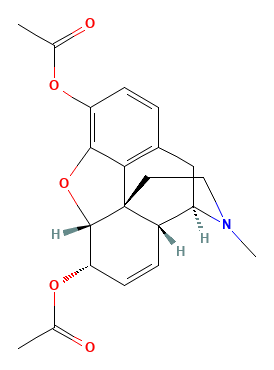
Rotate and inspect Heroin (diacetylmorphine) in Molecule Studio — right in your browser