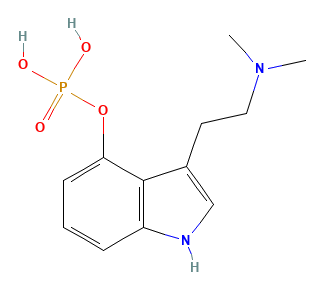
Psilocybin
Naturally occurring psychedelic compound found in certain mushroom species. Psilocybin is converted to psilocin in the body, which produces psychedelic effects.
Important information
This information is for educational purposes only. Always research thoroughly, test your substances, understand legal implications, and consult healthcare professionals. Never use substances alone or in unsafe environments.
Risks & side effects
- Challenging experiences
- Anxiety or panic
- HPPD (rare)
- Psychological distress in vulnerable individuals
Read the interactions and harm-reduction information below before the reference ranges.
Known interactions
Dangerous Psilocybin + Lithium
Lithium combined with psychedelics has caused seizures and other severe adverse events. This applies to all serotonergic psychedelics.
Risks: Seizures · Serotonin toxicity · Psychotic episodes · Medical emergency
Mechanism: Lithium alters serotonin signaling. Combined with 5-HT2A agonists, it may produce serotonin toxicity and lower seizure threshold.
What reduces the risk
- NEVER combine lithium with any psychedelic
- This includes psilocybin, LSD, DMT, mescaline, 2C-B
- Do not discontinue lithium without medical guidance
Sources: PsychonautWiki: Lithium Interactions · Multiple case reports on Erowid · Bonson KR et al. Hallucinogens and lithium: reports on psychedelic users. Drug Alcohol Depend. 1996
Caution Psilocybin + THC (Tetrahydrocannabinol)
Cannabis can dramatically intensify and alter psychedelic experiences, sometimes triggering anxiety, paranoia, or thought loops.
Risks: Intensified trip (potentially overwhelming) · Anxiety and paranoia · Thought loops · Disorientation
Mechanism: CB1 receptor activation modulates serotonergic signaling, potentially amplifying 5-HT2A-mediated effects unpredictably.
What reduces the risk
- Experienced users only
- Use very small amounts of cannabis if at all
- Avoid during the peak of psychedelic experience
- Cannabis on the comedown is less risky
Sources: TripSit Interaction Chart · PsychonautWiki: Psilocybin Interactions · Erowid: Combination Reports
Caution Psilocybin + MDMA (Ecstasy/Molly)
Known as 'hippy flipping.' MDMA adds euphoria and empathy to psilocybin's psychedelic effects, but increases physiological risks.
Risks: Increased neurotoxicity · Hyperthermia · Serotonin depletion · Dehydration · Overwhelming experience
Mechanism: Dual serotonergic activity — MDMA releases serotonin while psilocin agonizes 5-HT2A receptors.
What reduces the risk
- Experienced users only
- Reduce doses of both
- Stay hydrated and cool
- Have a sitter present
Sources: TripSit Interaction Chart · PsychonautWiki: MDMA Combinations
Caution Psilocybin + LSD (Lysergic Acid Diethylamide)
Both act on 5-HT2A receptors. Combining amplifies effects unpredictably and dramatically increases intensity.
Risks: Extremely intense experience · Prolonged duration · Difficult to predict effects · Psychological overwhelm
Mechanism: Both are 5-HT2A agonists. Cross-tolerance exists but combining increases total receptor activation.
What reduces the risk
- Not recommended for most users
- If combining, reduce doses of both significantly
- Have a sitter present
- Prepare for a long experience
Sources: TripSit Interaction Chart · PsychonautWiki: LSD Interactions
Caution Psilocybin + Salvia divinorum
Salvia acts on kappa-opioid receptors (unique mechanism). Combining with serotonergic psychedelics creates unpredictable and potentially overwhelming effects.
Risks: Extremely intense and unpredictable experience · Physical danger from disorientation · Severe dysphoria · Psychological overwhelm
Mechanism: Kappa-opioid agonism (salvia) + 5-HT2A agonism (psilocybin) = dual psychedelic mechanisms with unpredictable interaction.
What reduces the risk
- Not recommended
- If combining, use very low doses of both
- Sitter absolutely essential
- Safe physical environment critical
Sources: PsychonautWiki: Salvia Interactions · Erowid: Combination Reports
Caution Psilocybin + Ketamine
Both produce altered states through different mechanisms. The combination can be intensely disorienting but is not typically physiologically dangerous.
Risks: Extreme disorientation · Loss of motor control · Nausea · Overwhelming psychological effects
Mechanism: Psilocybin's 5-HT2A agonism + ketamine's NMDA antagonism = dual dissociative-psychedelic state.
What reduces the risk
- Only for very experienced users
- Reduce doses of both significantly
- Sitter essential
- Safe physical environment mandatory
Sources: TripSit Interaction Chart · PsychonautWiki: Ketamine Combinations
Absence of a listed interaction never implies safety. Check any combination in the app's 23×23 interaction matrix.
Harm reduction
- Test your substance
- Start with low dose
- Safe, comfortable setting
- Trusted trip sitter
- Avoid mixing with other substances
- Research contraindications
Dosage information
Psilocybin · Oral · non-clinical reference ranges · dried mushrooms
Tier labels reproduce reported amount and intensity terminology; they do not indicate safety or a recommendation.
| Tier | Amount | Note |
|---|---|---|
| Threshold | 0.25 grams | |
| Light | 0.5 to 1 grams | |
| Common | 1 to 2.5 grams | |
| Strong | 2.5 to 5 grams | |
| Heavy | Reported lower bound: 5 grams; no upper bound is established. |
Dosage ranges are reference values from published literature, not recommendations. Potency varies by source, body weight, and individual sensitivity — harm-reduction practice starts well below the ranges listed.
Limitations: Figures are transcribed from a reference compilation, not measured in a controlled study; the potency of any given material is unknown until tested.
Evidence: Review or reference work
Before any number: set, setting, purity, dose · LD50 · microdosing
On this page: known interactions · harm reduction
Duration
Total: 4-6 hours | Onset: 20-40 minutes | Peak: 2-3 hours
Total: 4-6 hours. Effects vary significantly with dose, set, and setting.
Effects
- Visual hallucinations
- Altered perception of time
- Euphoria
- Spiritual experiences
- Enhanced creativity
- Emotional insights
Legal status
Schedule I in most countries. Decriminalized in some US cities and legal for therapeutic use in some jurisdictions.
Pharmacology
5-HT2A receptor agonist. Psilocybin is dephosphorylated to psilocin, which crosses the blood-brain barrier.
Therapeutic research
- Johns Hopkins: Psilocybin for major depressive disorder — 71% response rate at 4 weeks (Davis et al., 2021)
- NYU/Johns Hopkins: End-of-life anxiety in cancer patients — sustained reductions in existential distress (Griffiths et al., 2016)
- FDA Breakthrough Therapy designation for treatment-resistant depression (Compass Pathways, 2018)
- Imperial College London: Psilocybin vs. escitalopram for depression — comparable efficacy with faster onset (Carhart-Harris et al., 2021)
- Johns Hopkins: Smoking cessation — 80% abstinence at 6 months (Johnson et al., 2014)
- Ongoing trials for OCD, anorexia nervosa, alcohol use disorder, and cluster headaches
Research
A preview of the linked research. The library includes different kinds of evidence; read each source for its methods and limitations.
Psilocybin can occasion mystical-type experiences having substantial and sustained personal meaning
Landmark Griffiths et al. 2006 study showing psilocybin produces mystical experiences with lasting personal and spiritual significance. One of the foundational modern psilocybin studies. Published in Psychopharmacology.
Psychedelics promote neuroplasticity through activation of intracellular 5-HT2A receptors
Vargas et al. 2023 Science paper discovering that psychedelics promote neuroplasticity via intracellular (not cell-surface) 5-HT2A receptors, explaining why serotonin doesn't trigger comparable effects.
Psilocybin as a Treatment for Psychiatric Illness: A Meta-Analysis
Irizarry et al. 2022 meta-analysis of 9 studies showing psilocybin improves symptoms in anxiety, depression, OCD, PTSD, and substance abuse. Published in Cureus.
Sources 3
- Psilocybin produces substantial and sustained decreases in depression and anxiety in patients with life-threatening cancer. Journal of Psychopharmacology, 30(12), pp. 1181-1197 (2016) doi:10.1177/0269881116675513
- Psilocybin for treatment-resistant depression: fMRI-measured brain mechanisms. Scientific Reports, 7, Article 13282 (2017) doi:10.1038/s41598-017-13282-7
- Erowid Psilocybin Mushroom Vault
History & culture
Psilocybin mushrooms have been used ceremonially for thousands of years. Aztec priests called them teonanácatl ('flesh of the gods') and used them in divination rituals documented by Spanish friar Bernardino de Sahagún in the 16th century. Stone mushroom sculptures dating to 1000 BCE have been found in Guatemala and Mexico. Western science rediscovered psilocybin through R. Gordon Wasson's 1957 Life magazine article about Mazatec healer María Sabina's velada ceremonies. Albert Hofmann isolated and synthesized psilocybin at Sandoz Laboratories in 1958. The longer history matters: Spanish colonial authorities suppressed ceremonial mushroom use for centuries — Indigenous practice survived underground and continues today — and enforcement of the prohibition era that began in 1968 fell hardest on communities of color, not on the researchers and counterculture figures who popularized psilocybin.
Natural origins
Found in over 200 mushroom species, primarily in the genus Psilocybe. Key species include Psilocybe cubensis (pantropical, most commonly cultivated), Psilocybe semilanceata ('liberty cap,' widespread in temperate grasslands), and Psilocybe azurescens (Pacific Northwest, among the most potent). The blue bruising reaction characteristic of psilocybin-containing mushrooms results from oxidation of psilocin. Caution: deadly look-alikes exist, including Galerina marginata — proper identification is critical.
Molecular family: Tryptamines
Tryptamines share an indole-based chemical scaffold. This family includes psilocybin, DMT, and 5-MeO-DMT. Their effects and duration differ, and family membership is not a safety ranking. 5-MeO-DMT can produce intense psychedelic experiences.
Structurally related to Serotonin (5-HT)