Adderall (Amphetamine)
Prescription stimulant containing mixed amphetamine salts, pharmacologically close to methamphetamine. Used for ADHD and narcolepsy, and widely used non-medically for euphoria, focus and stamina. Controlled substance with the same stimulant dependence risks.
Important information
This information is for educational purposes only. Always research thoroughly, test your substances, understand legal implications, and consult healthcare professionals. Never use substances alone or in unsafe environments.
Risks & side effects
- High addiction potential — same stimulant dependence risk profile as other amphetamines, concentrated in non-medical high-dose use
- Cardiovascular strain
- Anxiety
- Insomnia
- Appetite suppression
- Mood swings
- Tolerance
- Comedown/crash
- Psychosis at high doses
Read the interactions and harm-reduction information below before the reference ranges.
Known interactions
Dangerous Adderall + Fentanyl
Adderall does not cancel out fentanyl. It masks the sedation that would otherwise signal a rising opioid dose, so the opioid is often repeated, and it wears off first — leaving the respiratory depression unopposed.
Risks: Fatal respiratory depression after the stimulant wears off · Opioid dose repeated because sedation is masked · Cardiac strain from raised oxygen demand against suppressed breathing · Overdose recognised too late
Mechanism: Opposing effects on different systems, with different durations. The stimulant raises arousal, heart rate and oxygen demand while the mu-opioid agonist suppresses the respiratory drive. When the stimulant clears, the opioid effect remains.
What reduces the risk
- Avoid the combination
- Risk continues for hours after the stimulant fades, not only at the peak
- Keep naloxone within reach and do not dose alone
- Fentanyl test strips miss some analogues, so a negative result settles nothing
Sources: CDC: stimulant-involved opioid overdose deaths (National Vital Statistics System) · NIDA Research Topics: Polysubstance Use
Dangerous Adderall + Heroin (Diacetylmorphine)
Adderall does not cancel out heroin. It masks the sedation that would otherwise signal a rising opioid dose, so the opioid is often repeated, and it wears off first — leaving the respiratory depression unopposed.
Risks: Fatal respiratory depression after the stimulant wears off · Opioid dose repeated because sedation is masked · Cardiac strain from raised oxygen demand against suppressed breathing · Overdose recognised too late
Mechanism: Opposing effects on different systems, with different durations. The stimulant raises arousal, heart rate and oxygen demand while the mu-opioid agonist suppresses the respiratory drive. When the stimulant clears, the opioid effect remains.
What reduces the risk
- Avoid the combination
- Risk continues for hours after the stimulant fades, not only at the peak
- Keep naloxone within reach and do not dose alone
- Fentanyl test strips miss some analogues, so a negative result settles nothing
Sources: CDC: stimulant-involved opioid overdose deaths (National Vital Statistics System) · NIDA Research Topics: Polysubstance Use
Unsafe Adderall + Cocaine
Both are powerful stimulants that increase cardiovascular strain. The combination significantly raises risk of cardiac events.
Risks: Heart attack · Stroke · Dangerous hypertension · Cardiac arrhythmia · Seizures
Mechanism: Cocaine blocks reuptake + amphetamine releases catecholamines = excessive sympathetic activation.
What reduces the risk
- Never combine stimulants
- If prescribed Adderall, do not use cocaine
- Monitor for cardiac symptoms
- Seek medical attention for chest pain
Sources: TripSit Interaction Chart · PsychonautWiki: Stimulant Interactions
Unsafe Adderall + Methamphetamine
Both are amphetamines acting on the same systems. Combining them causes excessive stimulation and cardiovascular risk.
Risks: Cardiovascular emergency · Psychosis · Hyperthermia · Seizures · Serotonin syndrome (rare)
Mechanism: Additive dopamine and norepinephrine release through the same mechanism (TAAR1 agonism, vesicular release).
What reduces the risk
- Never combine amphetamines
- If prescribed Adderall, do not use methamphetamine
- Seek medical attention for rapid heartbeat or chest pain
Sources: TripSit Interaction Chart · PsychonautWiki: Amphetamine Interactions
Unsafe Adderall + MDMA (Ecstasy/Molly)
Both release monoamines. Combined cardiovascular and serotonergic load is dangerous.
Risks: Serotonin syndrome · Cardiovascular emergency · Hyperthermia · Neurotoxicity
Mechanism: Additive dopamine, norepinephrine, and serotonin release. Amphetamine may increase MDMA neurotoxicity.
What reduces the risk
- Do not combine MDMA with amphetamines
- If prescribed Adderall, skip it on day of MDMA use
- Allow at least 24 hours between use
Sources: TripSit Interaction Chart · PsychonautWiki: MDMA Interactions
Unsafe Adderall + Alcohol (Ethanol)
Amphetamine masks alcohol's sedating effects, leading to overconsumption of alcohol and increased risk of alcohol poisoning.
Risks: Alcohol poisoning · Increased alcohol consumption · Cardiovascular strain · Impaired judgment
Mechanism: Stimulant alertness prevents feeling drunk. Person drinks more than they would otherwise, risking alcohol toxicity.
What reduces the risk
- Avoid combining
- If prescribed Adderall, limit alcohol carefully
- Do not rely on feeling 'sober' — you are still intoxicated
Sources: TripSit Interaction Chart · NIDA: Prescription Stimulant Misuse
Absence of a listed interaction never implies safety. Check any combination in the app's 23×23 interaction matrix.
Harm reduction
- Only use as prescribed if possible
- Start with lowest effective dose
- Don't crush extended-release
- Stay hydrated and eat
- Avoid late-day dosing (insomnia)
- Take breaks to prevent tolerance
- Don't mix with other stimulants
- Monitor heart rate and blood pressure
Dosage information
Medical: 5-60mg/day in divided doses | Recreational - Light: 10-20mg | Common: 20-40mg | Strong: 40-60mg | Heavy: 60mg+
Dosage ranges are reference values from published literature, not recommendations. Potency varies by source, body weight, and individual sensitivity — harm-reduction practice starts well below the ranges listed.
Before any number: set, setting, purity, dose · LD50 · microdosing
On this page: known interactions · harm reduction
Duration
IR: 4-6 hours | XR: 10-12 hours | Onset: 30-60 minutes
IR (immediate release): 4-6 hours.
Effects
- Increased focus
- Enhanced concentration
- Euphoria
- Increased energy
- Decreased appetite
- Improved motivation
- Wakefulness
Legal status
Schedule II (USA). Prescription required. Commonly diverted and sold illegally.
Pharmacology
Releases dopamine and norepinephrine. Inhibits reuptake. TAAR1 agonist. Mix of dextro- and levo-amphetamine. In double-blind human studies, d-amphetamine and methamphetamine produce nearly indistinguishable effects at comparable doses — the differences between these drugs are more legal than pharmacological.
Therapeutic research
- FDA-approved for ADHD in children (6+) and adults — first-line treatment with decades of efficacy data
- FDA-approved for narcolepsy
- ADHD treatment linked to reduced risk of substance abuse, car accidents, and criminal behavior in longitudinal studies
- Extended-release formulations (Adderall XR, Vyvanse/lisdexamfetamine) designed to reduce abuse potential
- Research into optimal ADHD medication strategies: medication holidays, combination therapy, long-term outcomes
- Growing debate about overprescription vs. underdiagnosis of ADHD, particularly in adults
History & culture
Amphetamine was first synthesized by Romanian chemist Lazăr Edeleanu in 1887 but wasn't pharmacologically explored until 1927 by Gordon Alles, who tested it on himself and noted powerful stimulant effects. Smith, Kline and French marketed it as Benzedrine inhalers in 1933 for nasal congestion. During WWII, all sides distributed amphetamine to soldiers — the Allies alone issued 150 million tablets. Post-war, amphetamines were prescribed freely for depression, obesity, and fatigue — housewives, truckers, and students all used them. The modern Adderall formulation (mixed amphetamine salts) was introduced in 1996 by Shire Pharmaceuticals, becoming the face of the ADHD medication boom. Today it's a Schedule II controlled substance, yet remains one of the most commonly prescribed and most commonly diverted psychiatric medications in America.
Natural origins
Amphetamine is synthetic, but its molecular structure (phenethylamine backbone) is shared with many natural compounds. Phenethylamine itself occurs in chocolate, certain algae, and is produced by gut bacteria. The closest natural analogue is cathinone, found in khat (Catha edulis) — a plant chewed in East Africa and the Arabian Peninsula that produces mild amphetamine-like stimulation. Ephedrine from Ephedra (ma huang) is another natural relative. The structural family tree: phenethylamine → amphetamine → methamphetamine → MDMA, showing how one molecular scaffold produces radically different pharmacological profiles through small structural modifications.
Molecular family: Phenethylamines
Phenethylamines are a diverse family of compounds based on the 2-phenylethylamine structure. This backbone is shared with the neurotransmitter dopamine and many stimulants. Psychedelic phenethylamines feature ring substitutions (especially methoxy and amino groups) that modify their effects. This family includes both stimulating and sensory-enhancing compounds. Key characteristics: - Phenyl ring attached to short chain - Often methylated or amino-substituted - Include mescaline (from cacti) and synthetic variations - 2C family (2C-B, 2C-I, 2C-E) are synthetic explorations - Generally shorter-acting than tryptamines The 2C series represents a systematic exploration of how structural modifications affect consciousness. Substitution patterns on the benzene ring dramatically alter pharmacology—a testament to how small molecular changes produce vastly different experiences.
Structurally related to Dopamine, Tyramine
External resources
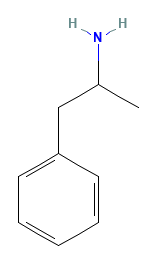
Rotate and inspect Amphetamine in Molecule Studio — right in your browser