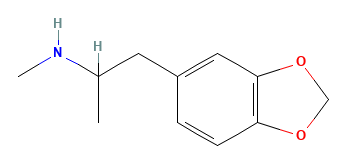
MDMA (Ecstasy/Molly)
Empathogenic stimulant known for producing feelings of euphoria, emotional warmth, and enhanced empathy. Used therapeutically for PTSD treatment.
Important information
This information is for educational purposes only. Always research thoroughly, test your substances, understand legal implications, and consult healthcare professionals. Never use substances alone or in unsafe environments.
Risks & side effects
- Possible neurotoxicity with frequent high-dose use — human evidence is debated, and overheating and exertion are major contributors
- Dehydration/overheating
- Serotonin depletion
- Comedown/depression
- Adulterants
- Cardiovascular strain
Read the interactions and harm-reduction information below before the reference ranges.
Known interactions
Unsafe MDMA + Cocaine
Cocaine blocks the mechanism by which MDMA releases serotonin, reducing desired effects while increasing cardiovascular risk.
Risks: Increased cardiovascular strain · Reduced MDMA effects (wasted dose, prompts redosing) · Hyperthermia · Serotonin complications
Mechanism: Cocaine blocks serotonin transporter, preventing MDMA-induced serotonin release. Additive cardiovascular stimulation persists.
What reduces the risk
- Do not combine MDMA with cocaine
- Cocaine does not enhance MDMA — it blocks its effects
- Wait for one to fully wear off before using the other
Sources: TripSit Interaction Chart · PsychonautWiki: MDMA Interactions · DanceSafe: Drug Combinations
Unsafe MDMA + Methamphetamine
Both release serotonin and catecholamines. The combination dramatically increases neurotoxicity and cardiovascular risk.
Risks: Severe neurotoxicity · Serotonin syndrome · Hyperthermia · Cardiac emergency · Seizures
Mechanism: Additive serotonin and dopamine release. Methamphetamine increases MDMA neurotoxicity. Extreme sympathetic activation.
What reduces the risk
- Never combine MDMA with methamphetamine
- Allow at least 24 hours between use
- Monitor body temperature
- Stay hydrated
Sources: TripSit Interaction Chart · Sprague JE et al. Roles of norepinephrine, free fatty acids, thyroid status, and skeletal muscle uncoupling protein 3 expression in MDMA-induced thermogenesis. J Pharmacol Exp Ther. 2004
Unsafe MDMA + Alcohol (Ethanol)
Alcohol increases dehydration risk with MDMA and masks signs of overheating. The combination increases neurotoxicity.
Risks: Severe dehydration · Hyperthermia (masked by alcohol) · Increased neurotoxicity · Liver strain · Impaired judgment
Mechanism: Both cause dehydration and strain the liver. Alcohol impairs body temperature regulation. Combined hepatotoxicity.
What reduces the risk
- Avoid alcohol with MDMA
- If drinking, limit to minimal amounts
- Prioritize water and electrolytes
- Monitor body temperature
Sources: TripSit Interaction Chart · RollSafe.org: MDMA and Alcohol · DanceSafe: MDMA Safety
Unsafe MDMA + Kanna (Sceletium tortuosum)
Kanna acts as a serotonin reuptake inhibitor. Combining with MDMA's massive serotonin release increases serotonin syndrome risk.
Risks: Serotonin syndrome · Hyperthermia · Seizures · Hypertension
Mechanism: Kanna's SRI activity prevents serotonin reuptake while MDMA floods the synapse. Risk of serotonin toxicity.
What reduces the risk
- Do not combine kanna with MDMA
- Allow at least 24 hours between use
- Kanna's SRI properties are similar to SSRIs
Sources: PsychonautWiki: Kanna Interactions · TripSit Interaction Chart
Unsafe MDMA + 5-MeO-DMT
5-MeO-DMT is a potent serotonin agonist. Combined with MDMA's serotonin release, serotonin syndrome risk is significant.
Risks: Serotonin syndrome · Hyperthermia · Seizures · Extreme psychological distress
Mechanism: 5-MeO-DMT strongly agonizes 5-HT1A/2A. MDMA releases serotonin. Combined serotonergic load may cause toxicity.
What reduces the risk
- Do not combine 5-MeO-DMT with MDMA
- Allow at least 24 hours between use
- 5-MeO-DMT should generally not be combined with other substances
Sources: PsychonautWiki: 5-MeO-DMT Interactions · TripSit Interaction Chart · Shulgin A, Shulgin A. TiHKAL. 1997
Unsafe MDMA + Adderall (Amphetamine)
Both release monoamines. Combined cardiovascular and serotonergic load is dangerous.
Risks: Serotonin syndrome · Cardiovascular emergency · Hyperthermia · Neurotoxicity
Mechanism: Additive dopamine, norepinephrine, and serotonin release. Amphetamine may increase MDMA neurotoxicity.
What reduces the risk
- Do not combine MDMA with amphetamines
- If prescribed Adderall, skip it on day of MDMA use
- Allow at least 24 hours between use
Sources: TripSit Interaction Chart · PsychonautWiki: MDMA Interactions
Caution MDMA + N,N-DMT (Dimethyltryptamine)
DMT is commonly consumed with MAOIs in ayahuasca preparations. MDMA combined with MAOIs is life-threatening. Ensure MAOI has fully cleared before MDMA use.
Risks: Serotonin syndrome (potentially fatal) · Hyperthermia · Seizures · Hypertensive crisis
Mechanism: MAO inhibition prevents serotonin breakdown; MDMA floods serotonin. Combined = serotonin syndrome.
What reduces the risk
- If using ayahuasca, wait at least 2 weeks before MDMA
- Never combine MDMA with any MAOI
- Know if your DMT preparation contains MAOIs
Sources: TripSit Interaction Chart · PsychonautWiki: MDMA Interactions · Gillman PK. Monoamine oxidase inhibitors, opioid analgesics and serotonin toxicity. Br J Anaesth. 2005
Caution MDMA + LSD (Lysergic Acid Diethylamide)
Known as 'candy flipping.' MDMA intensifies and alters the LSD experience. While popular, it increases neurotoxicity risk and unpredictability.
Risks: Increased neurotoxicity · Overwhelming intensity · Hyperthermia · Dehydration · Serotonin depletion
Mechanism: Both are serotonergic. MDMA's serotonin release modulates and intensifies LSD's 5-HT2A effects.
What reduces the risk
- Experienced users only with both substances
- Take MDMA 3-4 hours after LSD for safer timing
- Reduce doses of both substances
- Stay hydrated, monitor temperature
Sources: TripSit Interaction Chart · PsychonautWiki: MDMA Combinations · Erowid: Candy Flipping Reports
Caution MDMA + Psilocybin
Known as 'hippy flipping.' MDMA adds euphoria and empathy to psilocybin's psychedelic effects, but increases physiological risks.
Risks: Increased neurotoxicity · Hyperthermia · Serotonin depletion · Dehydration · Overwhelming experience
Mechanism: Dual serotonergic activity — MDMA releases serotonin while psilocin agonizes 5-HT2A receptors.
What reduces the risk
- Experienced users only
- Reduce doses of both
- Stay hydrated and cool
- Have a sitter present
Sources: TripSit Interaction Chart · PsychonautWiki: MDMA Combinations
Caution MDMA + 2C-B
Known as 'Nexus flipping.' 2C-B taken after MDMA can extend and modify the experience. Both are serotonergic.
Risks: Increased serotonergic effects · Hyperthermia · Dehydration · Overwhelming experience
Mechanism: 2C-B is a 5-HT2 agonist; MDMA releases serotonin. Sequential use is less risky than simultaneous, but still increases serotonergic load.
What reduces the risk
- If combining, take 2C-B as MDMA wears off (3-4 hours in)
- Reduce doses of both
- Stay hydrated and cool
- Experienced users only
Sources: TripSit Interaction Chart · PsychonautWiki: 2C-B Combinations
Absence of a listed interaction never implies safety. Check any combination in the app's 23×23 interaction matrix.
Harm reduction
- Test your substance (common adulterants)
- Stay hydrated (not over-hydrated)
- Take breaks to cool down
- Supplement protocol (antioxidants)
- 3-month minimum between uses
- Avoid overheating
- Start with lower dose
Dosage information
MDMA · Oral · non-clinical reference ranges
Tier labels reproduce reported amount and intensity terminology; they do not indicate safety or a recommendation.
| Tier | Amount | Note |
|---|---|---|
| Threshold | 30 milligrams | |
| Light | 40 to 75 milligrams | |
| Common | 75 to 125 milligrams | |
| Strong | 125 to 175 milligrams | |
| Heavy | Reported lower bound: 175 milligrams; no upper bound is established. | not recommended |
Dosage ranges are reference values from published literature, not recommendations. Potency varies by source, body weight, and individual sensitivity — harm-reduction practice starts well below the ranges listed.
Limitations: Figures are transcribed from a reference compilation, not measured in a controlled study; the potency of any given material is unknown until tested.
Evidence: Review or reference work
Before any number: set, setting, purity, dose · LD50 · microdosing
On this page: known interactions · harm reduction
Duration
3-6 hours | Onset: 30-60 minutes | Peak: 1.5-2.5 hours
Total: 3-6 hours. Afterglow can last 1-3 days. 3-month rule between uses.
Effects
- Euphoria
- Empathy and compassion
- Enhanced sensory perception
- Reduced anxiety
- Increased sociability
- Emotional openness
Legal status
Schedule I internationally. FDA Breakthrough Therapy designation for PTSD treatment.
Pharmacology
Releases serotonin, norepinephrine, and dopamine. Inhibits reuptake. TAAR1 agonist.
Therapeutic research
- MAPS Phase 3 trials: MDMA-assisted therapy for PTSD — 67% of participants no longer met PTSD diagnostic criteria (Mitchell et al., 2021)
- FDA Breakthrough Therapy designation for PTSD (2017)
- FDA advisory committee reviewed MDMA-assisted therapy (2024) — regulatory process ongoing
- Research into MDMA for social anxiety in autistic adults (Danforth et al., 2018)
- Studies on MDMA-assisted couples therapy for PTSD (ongoing at various sites)
- Investigations into MDMA for alcohol use disorder and eating disorders
Research
A preview of the linked research. The library includes different kinds of evidence; read each source for its methods and limitations.
MDMA-assisted therapy for severe PTSD: a randomized, double-blind, placebo-controlled phase 3 study
Landmark Phase 3 RCT (Mitchell et al., 2021) demonstrating MDMA-assisted therapy for severe PTSD produced significant symptom reductions with favorable safety profile across multiple sites. Published in Nature Medicine.
Müller, Liechti et al. 2021 Neuropsychopharmacology. fMRI study showing MDMA alters brain network connectivity differently than classic psychedelics, highlighting distinct mechanisms of action.
MDMA-assisted psychotherapy for treatment of PTSD: pilot dose-response study
Mithoefer et al. 2018 J Psychopharmacol. Randomized pilot study (n=28) comparing MDMA doses (40mg, 100mg, 125mg) for chronic PTSD. Active doses showed greater symptom reduction; 76% no longer met PTSD criteria at 12-month follow-up.
Sources 3
- MDMA-assisted psychotherapy for post-traumatic stress disorder in military veterans, firefighters, and police officers. The Lancet Psychiatry, 5(6), pp. 486-497 (2018) doi:10.1016/S2215-0366(18)30135-4
- MDMA-assisted therapy for severe PTSD: a randomized, double-blind, placebo-controlled phase 3 study. Nature Medicine, 27, pp. 1025-1033 (2021) doi:10.1038/s41591-021-01336-3
- Erowid MDMA Vault
History & culture
MDMA was first synthesized by Merck chemist Anton Köllisch in 1912 as an intermediate in a synthesis patent — its psychoactive properties went unnoticed for decades. Alexander Shulgin independently resynthesized it in 1976 and, recognizing its therapeutic potential, introduced it to psychotherapist Leo Zeff. Through the late 1970s–early 1980s, an estimated 500,000 doses were used in therapeutic settings under the name 'Adam.' The DEA emergency-scheduled MDMA in 1985 despite objections from the medical community. Meanwhile, MDMA entered rave culture as 'Ecstasy,' becoming one of the most widely used recreational drugs globally.
Natural origins
MDMA is entirely synthetic. It was originally derived from safrole, a compound found in sassafras oil (from Sassafras albidum bark and root), camphor laurel, and other essential oils. The synthesis typically involves safrole → MDP2P (PMK) → MDMA. Due to safrole precursor controls, illicit production increasingly uses alternative synthetic routes. MDMA belongs to the substituted methylenedioxyphenethylamine class — structurally related to both amphetamine (stimulant) and mescaline (psychedelic), which explains its combined empathogenic and stimulant properties.
Molecular family: Phenethylamines
Phenethylamines are a diverse family of compounds based on the 2-phenylethylamine structure. This backbone is shared with the neurotransmitter dopamine and many stimulants. Psychedelic phenethylamines feature ring substitutions (especially methoxy and amino groups) that modify their effects. This family includes both stimulating and sensory-enhancing compounds. Key characteristics: - Phenyl ring attached to short chain - Often methylated or amino-substituted - Include mescaline (from cacti) and synthetic variations - 2C family (2C-B, 2C-I, 2C-E) are synthetic explorations - Generally shorter-acting than tryptamines The 2C series represents a systematic exploration of how structural modifications affect consciousness. Substitution patterns on the benzene ring dramatically alter pharmacology—a testament to how small molecular changes produce vastly different experiences.
Structurally related to Dopamine, Tyramine