Mescaline
Psychedelic phenethylamine alkaloid found in peyote, San Pedro, and Peruvian torch cacti. Long history of traditional use.
Important information
This information is for educational purposes only. Always research thoroughly, test your substances, understand legal implications, and consult healthcare professionals. Never use substances alone or in unsafe environments.
Risks & side effects
- Nausea and vomiting
- Challenging experiences
- Long duration
- Physical discomfort
- HPPD (rare)
Read the interactions and harm-reduction information below before the reference ranges.
Known interactions
No known dangerous interactions in our database — this does not mean all combinations are safe. Always research before combining substances.
Harm reduction
- Empty stomach or light meal
- Safe setting
- Trip sitter helpful
- 12+ hour availability
- Test substance
- Respect traditional contexts
Dosage information
Mescaline · Oral · non-clinical reference ranges
Tier labels reproduce reported amount and intensity terminology; they do not indicate safety or a recommendation.
| Tier | Amount | Note |
|---|---|---|
| Threshold | 50 milligrams | |
| Light | 100 to 200 milligrams | |
| Common | 200 to 300 milligrams | |
| Strong | 300 to 500 milligrams | |
| Heavy | Reported lower bound: 500 milligrams; no upper bound is established. |
Dosage ranges are reference values from published literature, not recommendations. Potency varies by source, body weight, and individual sensitivity — harm-reduction practice starts well below the ranges listed.
Limitations: Figures are transcribed from a reference compilation, not measured in a controlled study; the potency of any given material is unknown until tested.
Evidence: Review or reference work
Before any number: set, setting, purity, dose · LD50 · microdosing
On this page: known interactions · harm reduction
Duration
10-12 hours total | Onset: 1-2 hours | Peak: 3-4 hours
Total: 10-12 hours. Very long duration — plan for a full day.
Effects
- Visual hallucinations
- Enhanced colors
- Euphoria
- Introspection
- Spiritual experiences
- Emotional openness
Legal status
Schedule I. Religious exemptions exist for Native American Church. Cacti legal in some jurisdictions.
Pharmacology
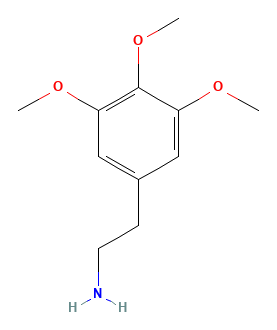
5-HT2A/2C receptor agonist. Phenethylamine structure.
Therapeutic research
- Historical: Early psychiatric research in the 1950s–60s explored mescaline for alcoholism and neurosis
- Native American Church: Decades of traditional use associated with reduced rates of alcoholism among members
- Limited modern clinical research due to legal restrictions and cactus supply concerns
- Beckley Foundation and others advocate for renewed research into mescaline-assisted therapy
- Preliminary research suggests potential for treating depression, PTSD, and substance use disorders
Research
A preview of the linked research. The library includes different kinds of evidence; read each source for its methods and limitations.
Dinis-Oliveira et al. 2019 Current Molecular Pharmacology. Comprehensive review of mescaline/peyote pharmacokinetics, metabolism, and clinical implications.
2023 Molecules. Review examining mescaline pharmacology, traditional ceremonial use in Native American Church, and modern therapeutic potential.
Peyote and mescaline exposures: a 12-year review of a statewide poison center database
2010 Clinical Toxicology. Retrospective analysis of mescaline/peyote exposure reports documenting clinical presentation and outcomes.
Sources 1
History & culture
Mescaline has the longest documented history of any psychedelic. Peyote (Lophophora williamsii) use by indigenous peoples of Mexico dates back at least 5,700 years based on radiocarbon-dated specimens found in caves along the Rio Grande. The Huichol (Wixárika) people of Mexico continue centuries-old pilgrimages to Wirikuta to harvest peyote for religious ceremonies. The Native American Church, founded in 1918, formally incorporated peyote into Christian-influenced worship. Mescaline was first isolated by Arthur Heffter in 1897 and first synthesized by Ernst Späth in 1919. Aldous Huxley's 1954 book 'The Doors of Perception' documented his mescaline experience and influenced a generation.
Natural origins
Found naturally in several cactus species: peyote (Lophophora williamsii, native to the Chihuahuan Desert of Mexico and Texas), San Pedro (Echinopsis pachanoi, Andean highlands of Peru, Ecuador, and Bolivia), and Peruvian torch (Echinopsis peruviana). San Pedro grows much faster than peyote and has been used in Andean healing ceremonies for over 3,000 years. Conservation alert: wild peyote is severely threatened by habitat loss and overharvesting — it grows extremely slowly (decades to maturity). The Native American Church and conservation organizations advocate for peyote habitat protection.
Molecular family: Phenethylamines
Phenethylamines are a diverse family of compounds based on the 2-phenylethylamine structure. This backbone is shared with the neurotransmitter dopamine and many stimulants. Psychedelic phenethylamines feature ring substitutions (especially methoxy and amino groups) that modify their effects. This family includes both stimulating and sensory-enhancing compounds. Key characteristics: - Phenyl ring attached to short chain - Often methylated or amino-substituted - Include mescaline (from cacti) and synthetic variations - 2C family (2C-B, 2C-I, 2C-E) are synthetic explorations - Generally shorter-acting than tryptamines The 2C series represents a systematic exploration of how structural modifications affect consciousness. Substitution patterns on the benzene ring dramatically alter pharmacology—a testament to how small molecular changes produce vastly different experiences.
Structurally related to Dopamine, Tyramine