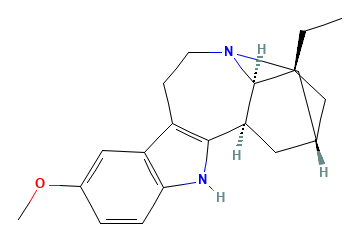
Ibogaine
Powerful psychoactive alkaloid from iboga plant. Known for anti-addictive properties, particularly for opioid dependence. Requires medical supervision due to cardiac risks.
Important information
This information is for educational purposes only. Always research thoroughly, test your substances, understand legal implications, and consult healthcare professionals. Never use substances alone or in unsafe environments.
Risks & side effects
- Cardiac arrhythmia and death
- QT prolongation
- Severe nausea
- Ataxia
- Psychological distress
- Long duration
Read the interactions and harm-reduction information below before the reference ranges.
Known interactions
Dangerous Ibogaine + Fentanyl
Ibogaine causes QT prolongation. Combined with opioids, risk of fatal cardiac arrhythmia and respiratory depression is extreme.
Risks: Fatal cardiac arrhythmia · QT prolongation leading to Torsades de Pointes · Respiratory failure · Death
Mechanism: Ibogaine blocks hERG potassium channels (QT prolongation) + opioid respiratory depression = cardiac arrest risk.
What reduces the risk
- Ibogaine requires full medical screening before use
- All opioids must be cleared from the system first
- Only use ibogaine in a medical facility with cardiac monitoring
- EKG screening mandatory
Sources: Koenig X, Hilber K. The anti-addiction drug ibogaine and the heart. Molecules. 2015 · MAPS: Ibogaine Therapy Guidelines · TripSit Interaction Chart
Dangerous Ibogaine + Alcohol (Ethanol)
Ibogaine's cardiac risks are compounded by alcohol's CNS depression and QT-prolonging effects.
Risks: Fatal cardiac arrhythmia · QT prolongation · Respiratory depression · Hepatotoxicity
Mechanism: Both substances can prolong QT interval. Combined with ibogaine's 24-48 hour duration, cardiac risk is extreme.
What reduces the risk
- Abstain from alcohol for at least 1 week before ibogaine
- Medical supervision mandatory
- Full cardiac screening required
Sources: Alper KR et al. Ibogaine: a review. Am J Addict. 2001 · TripSit Interaction Chart
Dangerous Ibogaine + Alprazolam (Xanax)
Benzodiazepines combined with ibogaine increase cardiac and respiratory depression risk. Ibogaine clinics require benzodiazepine clearance.
Risks: Fatal cardiac arrhythmia · Respiratory failure · Profound sedation
Mechanism: Additive CNS/respiratory depression + ibogaine's QT prolongation.
What reduces the risk
- Must taper off benzodiazepines before ibogaine treatment
- Medical supervision mandatory
- Do NOT abruptly stop benzodiazepines (seizure risk)
Sources: GITA: Clinical Guidelines for Ibogaine-Assisted Detoxification · TripSit Interaction Chart
Absence of a listed interaction never implies safety. Check any combination in the app's 23×23 interaction matrix.
Harm reduction
- MEDICAL SUPERVISION ESSENTIAL
- Cardiac screening required
- EKG monitoring
- Licensed clinic only
- Complete medical history
- Medication interactions screening
- Support team present
Dosage information
Flood dose: 15-20mg/kg body weight (ONLY in medical setting)
Dosage ranges are reference values from published literature, not recommendations. Potency varies by source, body weight, and individual sensitivity — harm-reduction practice starts well below the ranges listed.
Before any number: set, setting, purity, dose · LD50 · microdosing
On this page: known interactions · harm reduction
Duration
24-48 hours total experience
24-48 hours total. MEDICAL SUPERVISION ESSENTIAL. Cardiac monitoring required.
Effects
- Intense introspection
- Life review experiences
- Reduced cravings
- Physical purging
- Vivid visions
- Ego dissolution
Legal status
Schedule I (USA). Legal in some countries. Available in clinics in Mexico, Costa Rica, and elsewhere.
Pharmacology
Complex: NMDA antagonist, kappa-opioid agonist, serotonin transporter inhibitor, and more. Metabolite noribogaine is long-acting.
Therapeutic research
- Opioid addiction interruption: single flood dose reported to eliminate withdrawal and reduce cravings for weeks to months
- MAPS-sponsored observational studies in Mexico and New Zealand documenting addiction treatment outcomes
- ATAI Life Sciences (Deborah Mash) developing 18-MC, a synthetic ibogaine derivative without cardiac risks
- Alcohol and stimulant addiction treatment being explored in clinical settings
- PTSD and trauma processing: patients report ibogaine facilitates 'life review' experiences with therapeutic value
- FDA granted Breakthrough Therapy Designation discussions ongoing for ibogaine derivatives
Research
A preview of the linked research. The library includes different kinds of evidence; read each source for its methods and limitations.
Ibogaine: Revisiting an Ancient Alkaloid for Modern Opioid Dependence
Moore et al. 2025 Substance Use & Misuse. Review examining ibogaine's pharmacology and clinical evidence for treating opioid dependence.
Mash et al. 2018 Frontiers in Pharmacology. Clinical observations showing ibogaine detoxification effectively transitions opioid/cocaine users toward abstinence.
Safety of ibogaine administration in detoxification of opioid-dependent individuals
Knuijver, Schellekens et al. 2022 Addiction. Open-label observational study (n=14) evaluating ibogaine safety during opioid detoxification. Documented cardiac monitoring protocols and outcomes.
History & culture
Ibogaine is central to the Bwiti spiritual tradition of the Fang and Mitsogo peoples of Gabon and Cameroon, where the iboga root bark has been consumed in initiation ceremonies for centuries — possibly millennia. The Bwiti ceremony involves consuming large quantities of root bark over 2-3 days to induce visionary states considered essential for spiritual rebirth. Western science discovered ibogaine in 1901 when Dybowski and Landrin isolated the alkaloid. In the 1960s, Howard Lotsof — a heroin addict — accidentally discovered ibogaine's anti-addictive properties and spent decades advocating for its medical development. Despite Schedule I status in the U.S., ibogaine treatment clinics have proliferated in Mexico, Costa Rica, and New Zealand.
Natural origins
Ibogaine is the principal alkaloid of Tabernanthe iboga, a perennial rainforest shrub native to the Congo Basin of Central Africa. The root bark contains the highest alkaloid concentration (5-6%) and is the traditional preparation. Iboga grows slowly — a mature shrub may take 5-7 years to produce harvestable root bark. Overharvesting for the global addiction treatment market has raised conservation concerns, with Gabonese authorities restricting export. Related species Voacanga africana and Tabernaemontana undulata contain ibogaine precursors and are being explored as sustainable alternatives. Total synthesis is possible but expensive.