Kanna (Sceletium tortuosum)
South African succulent plant traditionally used as a mood enhancer. Contains mesembrine and related alkaloids with SSRI-like properties.
Important information
This information is for educational purposes only. Always research thoroughly, test your substances, understand legal implications, and consult healthcare professionals. Never use substances alone or in unsafe environments.
Risks & side effects
- Generally mild
- Headache
- Nausea (rare)
- SSRI interactions
- Sedation at high doses
Read the interactions and harm-reduction information below before the reference ranges.
Known interactions
Unsafe Kanna + MDMA (Ecstasy/Molly)
Kanna acts as a serotonin reuptake inhibitor. Combining with MDMA's massive serotonin release increases serotonin syndrome risk.
Risks: Serotonin syndrome · Hyperthermia · Seizures · Hypertension
Mechanism: Kanna's SRI activity prevents serotonin reuptake while MDMA floods the synapse. Risk of serotonin toxicity.
What reduces the risk
- Do not combine kanna with MDMA
- Allow at least 24 hours between use
- Kanna's SRI properties are similar to SSRIs
Sources: PsychonautWiki: Kanna Interactions · TripSit Interaction Chart
Unsafe Kanna + 5-MeO-DMT
Kanna's SRI properties combined with 5-MeO-DMT's strong serotonin agonism creates serotonin syndrome risk.
Risks: Serotonin syndrome · Hyperthermia · Seizures
Mechanism: Kanna inhibits serotonin reuptake while 5-MeO-DMT directly activates serotonin receptors, increasing synaptic serotonin to dangerous levels.
What reduces the risk
- Do not combine
- Allow at least 24 hours washout period
Sources: PsychonautWiki: 5-MeO-DMT Interactions · TripSit Interaction Chart
Absence of a listed interaction never implies safety. Check any combination in the app's 23×23 interaction matrix.
Harm reduction
- Don't mix with SSRIs or MAOIs
- Start with low dose
- Source quality product
- Avoid daily use initially
- Take breaks to prevent tolerance
Dosage information
Insufflated: 25-100mg | Sublingual: 50-200mg | Oral: 200-400mg | Smoked: 50-150mg
Dosage ranges are reference values from published literature, not recommendations. Potency varies by source, body weight, and individual sensitivity — harm-reduction practice starts well below the ranges listed.
Before any number: set, setting, purity, dose · LD50 · microdosing
On this page: known interactions · harm reduction
Duration
1-3 hours | Onset: 15-60 minutes depending on ROA
Insufflated: 1-3 hours. Faster onset.
Sublingual: 1-3 hours.
Effects
- Mood elevation
- Reduced anxiety
- Mild euphoria
- Empathy enhancement
- Relaxation
- Cognitive enhancement
Legal status
Legal in most countries. Unscheduled supplement.
Pharmacology
Serotonin reuptake inhibitor (mesembrine). Also affects PDE4.
Therapeutic research
- Anxiety reduction: Zembrin (standardized extract) studied in clinical trials showing amygdala attenuation on fMRI
- Cognitive enhancement: demonstrated improved executive function and cognitive flexibility in controlled studies
- Depression support: mesembrine's SSRI-like action studied as a natural antidepressant alternative
- PDE4 inhibition research suggests anti-inflammatory and neuroprotective potential
- Stress resilience: studied for cortisol reduction and HPA axis modulation
- South African traditional medicine practitioners continue to use it for a range of conditions
Research
A preview of the linked research. The library includes different kinds of evidence; read each source for its methods and limitations.
Sceletium tortuosum effects on anxiety: A systematic review and meta-analysis
Gouhie et al. 2023 Brain Disorders. Meta-analysis examining Kanna's anxiolytic effects across multiple studies, finding significant anxiety reduction.
Olatunji et al. 2022 J Ethnopharmacology. Comprehensive review of Kanna's chemistry, pharmacology, and clinical evidence for anxiety and cognitive effects.
First toxicity profile prediction for mesembrine – archetypal psychoactive Sceletium alkaloid
Niżnik, Jurowski 2025 Chemico-Biological Interactions. First computational toxicity prediction for kanna's main alkaloid mesembrine, predicting LD50 and key toxicological endpoints.
History & culture
Kanna has been used by the San and Khoikhoi peoples of South Africa for thousands of years — archaeological evidence suggests use dating back at least 300 years, with oral traditions extending much further. Known as 'kougoed' (chewing thing) in Afrikaans, it was traditionally fermented and chewed, smoked, or made into teas and tinctures. Dutch colonists documented kanna use as early as 1662. The San used it to reduce hunger and thirst on long hunts, for social bonding, and in healing rituals. Interest surged in the 2000s as Western supplement companies began marketing it for mood support, leading to concerns about sustainable harvesting of wild populations.
Natural origins
Sceletium tortuosum is a low-growing succulent (ice plant family, Aizoaceae) native to the arid regions of South Africa's Western and Eastern Cape. It contains mesembrine, mesembrenone, mesembrenol, and tortuosamine — alkaloids concentrated in the leaves, stems, and roots. Traditional preparation involves fermenting the plant material for several days in sealed containers, which alters the alkaloid profile (reducing oxalic acid and increasing mesembrine). Wild populations grow in rocky, well-drained soils in the Karoo and Namaqualand. Sustainable cultivation programs have been established by companies like HGH Pharmaceuticals in partnership with San and Khoikhoi communities through benefit-sharing agreements.
External resources
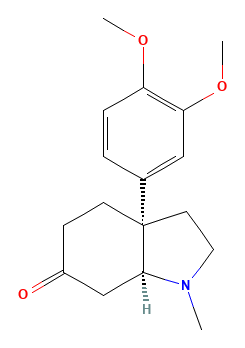
Rotate and inspect Mesembrine in Molecule Studio — right in your browser